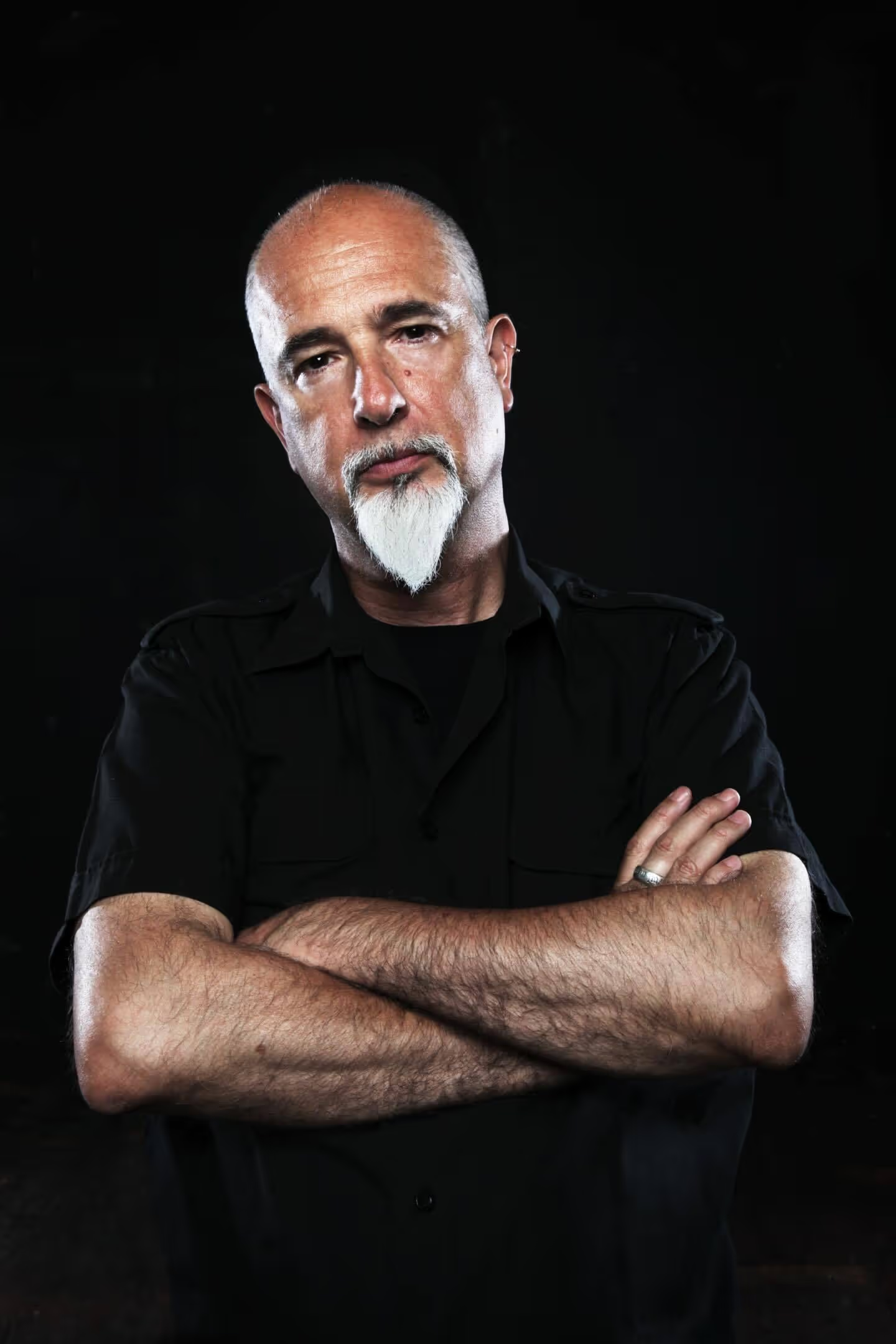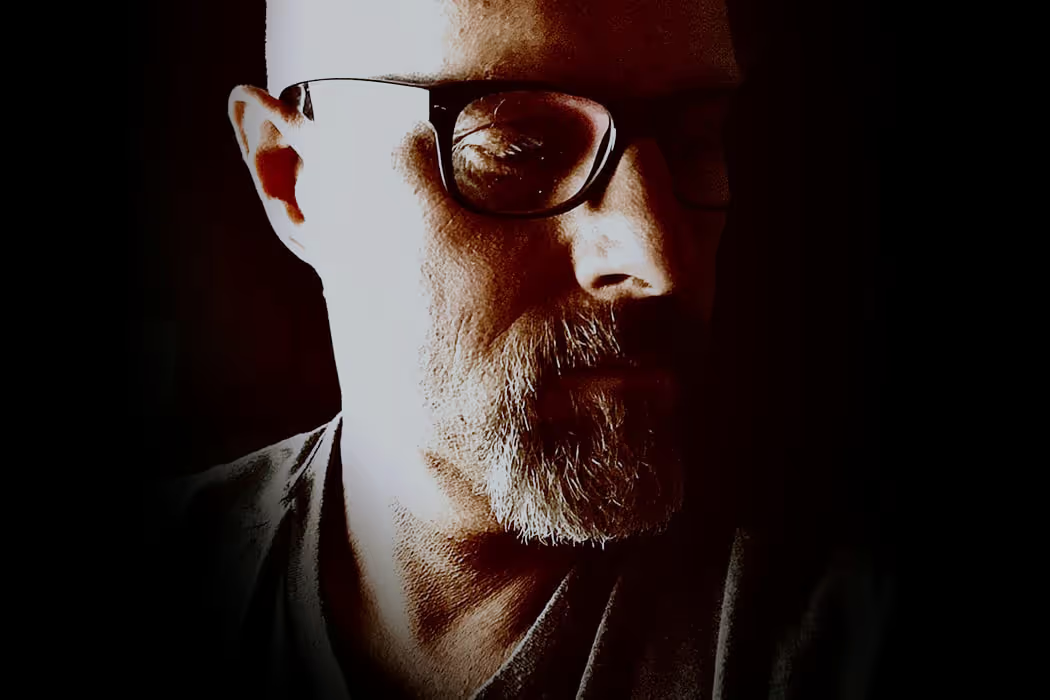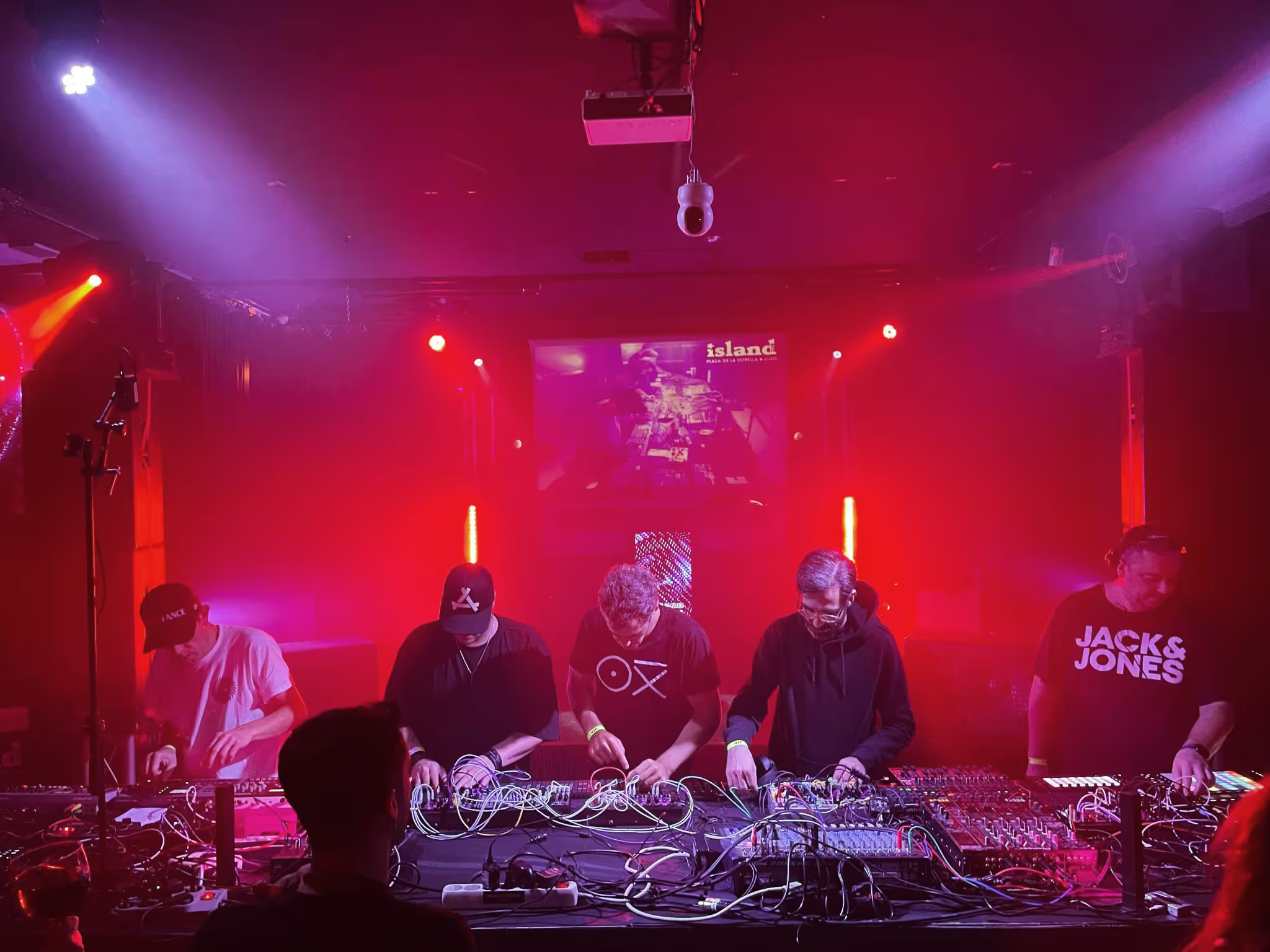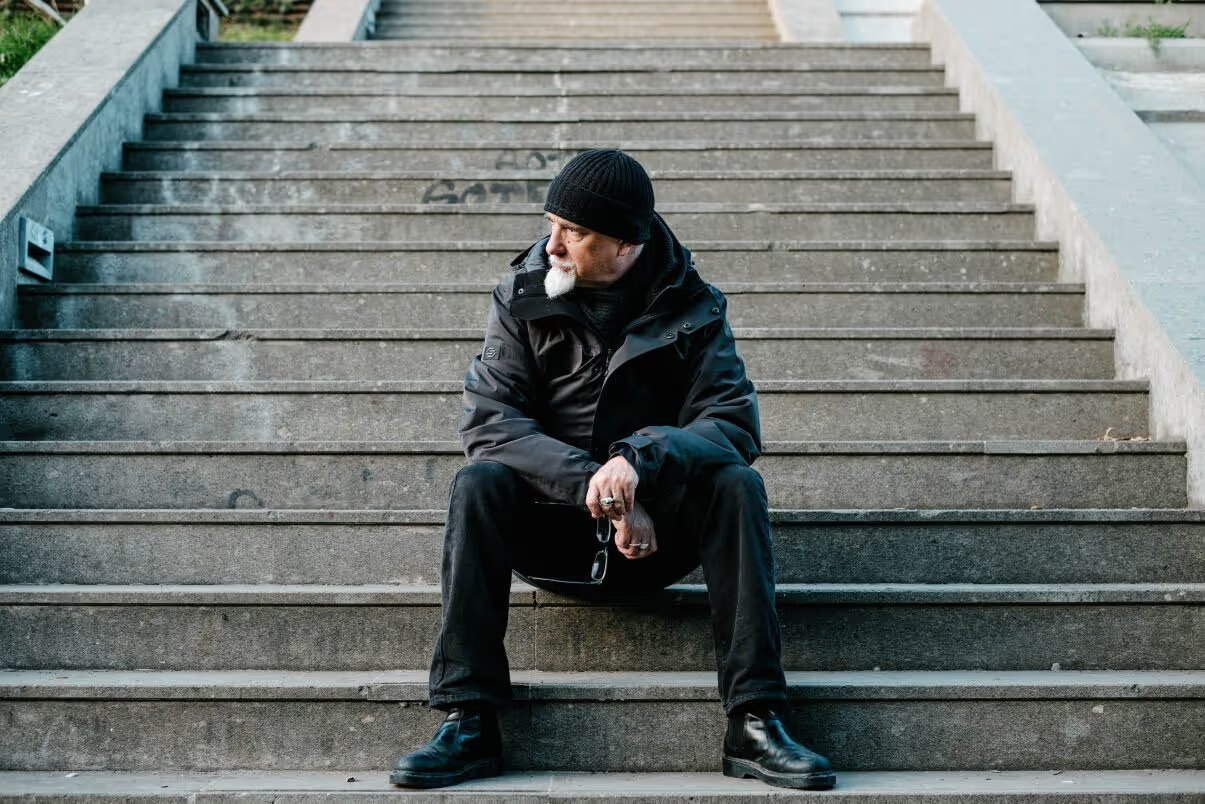


With a career spanning from late ’70s punk roots to seminal projects like Sigillum-S, and collaborations with artists such as Bill Laswell, Harold Budd, Nils Petter Molvær, Merzbow, and many others, Eraldo Bernocchi is widely regarded as a master sonic sculptor. We had the opportunity to speak with him about his creative practice and his use of the OXI One MKII. As the Founder of RareNoise Records and a renowned sound designer for brands including Elektron, Erica Synths, and Polyend, he brings decades of deep musical vision to the featured performance below—showing how OXI One MKII becomes a powerful hub for contemporary composition and live sequencing.
cover photo credit: Francesco Filippo
Artistic Identity & Approach
You’ve worked across ambient, metal, dub, sound design—what would you say is the common thread connecting your work?
I’d say the defining theme for me is exploration. I’m constantly searching for what feels like the sound, something that resonates on a deeper level. I’ve never been interested in staying within the boundaries of a single genre; music is such a vast territory that limiting myself would feel unnatural. I’m always drawn to new machines, new textures, new sonic possibilities, and I can’t help but push into unfamiliar areas. Exploration isn’t just a habit for me; it’s a necessity. The same goes for collaboration, I genuinely love working with different artists, absorbing their perspectives, and discovering how our ideas merge into something unexpected. I understand why genres exist, and I get the need for definition, but personally I perceive music as a single, expansive environment of sound, a landscape you navigate. That’s the territory I move through, and I don’t ever want to stop discovering what’s out there.
Your music often feels very physical and textural. Where does that tactile approach to sound come from?
It all comes from hours of improvisation and the editing that follows. I come from a generation that started with very primitive technology. My first instrument was a terrible, half-broken guitar and a distortion pedal that only worked when it felt like it. When the first four-track cassette recorder entered my life, it felt like a revelation, back then it was genuinely futuristic. From there, I moved through whatever tools I could afford or borrow, samplers, media sanitizers, drum machines, contact mics, anything capable of generating or capturing sound. I would spend endless hours improvising, searching for the moment when a sound aligned with what I imagined. It’s a process I love and hate at the same time: the obsessive hunt for the right texture, the right noise, the right breath of sound. But it’s also where everything begins for me, inside that long, messy, beautiful process of exploration.
When starting a new piece, do you begin with an instrument, a concept, or an emotional direction?
I usually begin with an image, but it doesn’t need to be a literal photograph. It can be a sentence, a fragment, or something symbolic. What matters is that it carries an emotional signal. For me, everything starts with emotion. The feeling comes first, and then it naturally gathers an image around it, a shape, a colour, a line of text, something that resonates with that inner state. Those early fragments act like anchors. They give the emotion a form I can start developing and translating into sound. So my process isn’t about building ideas from the outside; it’s about listening to what the emotion wants to become. The artwork grows from that initial impulse, and the image is simply the first way it surfaces.
Workflow, Interfaces & Tools
You seem to have a strong physical connection with your instruments. What makes an interface “right” for you?
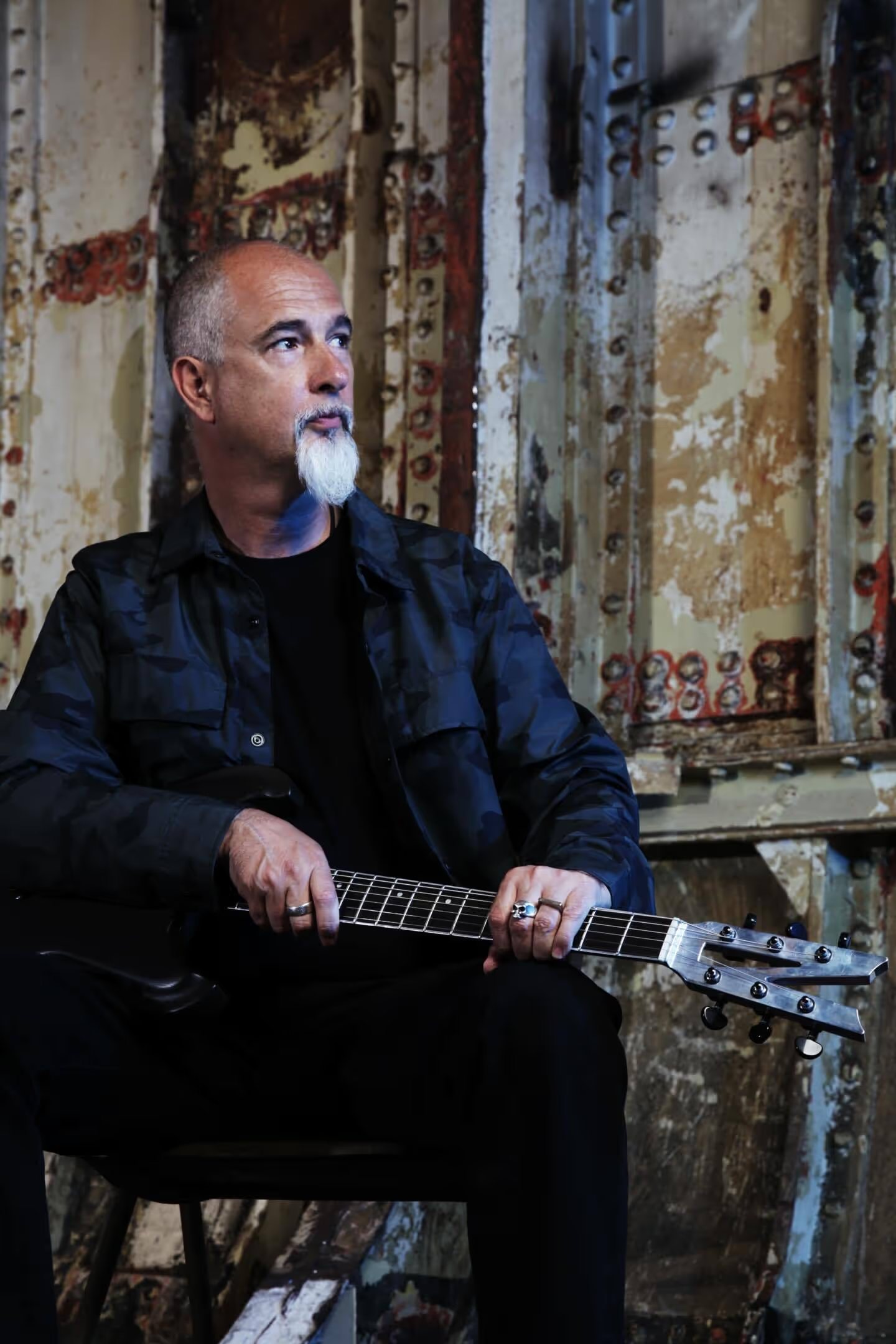
After an initial infatuation with having a computer on stage, I eventually went back to dedicated machines. I get bored performing with a laptop, and that’s without mentioning the risk of system failures, which I’ve experienced more than once. The perfect interface for me is intuitive and immediate, but capable of complexity when I need it. It should require only a manageable amount of menu-diving. I want a tool that lets me create quickly so I can spend more of my time refining, shaping, and editing rather than fighting the interface.
Which tools or instruments have truly changed the way you think about composition?
Definitely the four-track cassette recorder, a delay with a primitive loop function I had in the ’80s, my trusted Korg MS-20, the Elektron Octatrack, my baritone guitar, and of course the DAW. Each of these opened a different door, a new way of thinking about sound and structure.
Your setup blends guitar, electronics, processing. How do you decide which voice leads in a new track?
For me it never starts with the instrument or the technology, it starts with an emotional direction. Once I know the atmosphere or feeling I want to explore, the leading voice almost chooses itself. Sometimes it’s the guitar, because a gesture or tone immediately resonates with the mood. Other times it’s a synth, sampler, or a piece of processing that sparks the first movement. I don’t force a hierarchy; I listen for the element that responds most naturally to that initial emotional signal. From there, everything else grows around the lead voice, supporting or challenging it, but always serving the emotional core of the track.
Sequencing & OXI One MKII
What role do sequencers play in your creative process, are they compositional tools or performance tools?
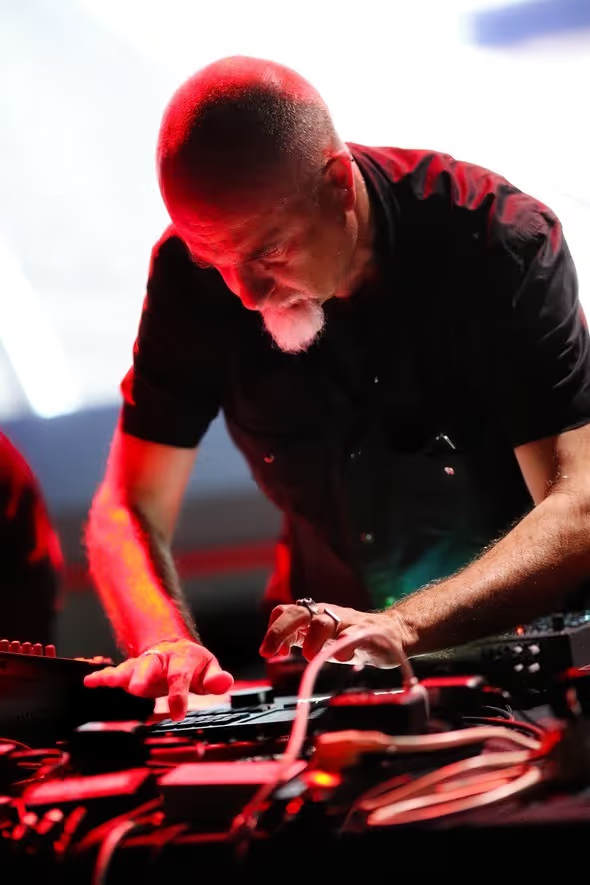
Both, equally. I need tools that work in the studio and can move to the stage without breaking the flow. My ideal instrument is something I can shape ideas with in the studio, then take on the road and use with the same immediacy, no compromises, no translation issues. For example, the OXI ONE is something I rely on heavily in certain projects, including my work with Hoshiko Yamane of Tangerine Dream. It gives me a flexible, intuitive way to build ideas quickly, and it lets me improvise and change everything on the spot. That kind of freedom is essential. And on stage, the tactile surface is perfect for playing live. That continuity, moving from studio to stage while keeping the same responsiveness and emotional intent, is what makes a tool truly meaningful for me.
Your patterns often feel alive, full of micro-variations. How intentional is that level of detail?
It’s completely intentional. I’ve always enjoyed playing with people, and for years I worked with jazz musicians who constantly experimented and pushed boundaries. They could improvise on anything, and I naturally developed a similar approach. Because of that, I need machines that can improvise with me. Especially on stage, I want the setup to breathe and evolve. I like small details shifting through parameter locks, while bigger structural elements are left to randomness. That combination keeps the music alive. On top of that constantly changing environment, I’m improvising, recording, and later editing. It’s a dynamic interaction between the machines, the moment, and my instincts, and that’s exactly how I like it. The OXI ONE is a fantastic instrument for this purpose.
When exploring a new sequencer like the OXI One MKII, what do you look for in the first hour?
Immediacy. I want to know how quickly the tool can translate my ideas into sound. In parallel, I’m checking how far I can push it in terms of complexity. I don’t like machines that are complex for the sake of it, but I love having the possibility to go deep, to change things instantly, and to approach creation from different angles. I used the MKI for years and loved it, even though the four-track limit sometimes felt constraining. With eight tracks, the MKII is becoming the core of my studio. It has the immediacy I need, plus the depth and flexibility to follow wherever the music wants to go. The chord options are also a real treat for someone like me who doesn’t have strong academic training in music theory.
The MKII introduced new modulation options, expanded lanes, and deeper performance features. Which resonate most with you?
I love the Flow function, it really expands creative possibilities. The modulation lanes are also fascinating, especially for building movement and unpredictability into sequences.
Do you prefer a sequencer that surprises you, or one that executes your exact intentions?
I always start with precision, I want the sequence to do exactly what I ask. But I also love being surprised. Those unexpected moments trigger new ideas and can completely shift your perspective. The real magic happens in the balance between control and unpredictability.
With the MKII, building large “macro-instruments” from multiple tracks becomes easier. Does this fit your way of composing?
Absolutely. The multitrack option is fantastic. I love stratifying sounds, and with eight multitrack sections, each with eight lanes, giving you 64 independent streams of MIDI data, the possibilities become almost overwhelming in the best way. You can layer, sequence, and modulate at extreme levels. It opens the door to intricate rhythmic ecosystems, evolving textures, or wild generative structures. The creative potential is enormous.
Sound Design, Atmosphere & Collaboration
Your music often carries a strong cinematic quality. How do you approach building depth and atmosphere?
It really depends on the project, but the cinematic quality comes from my direct relationship with images. I tend to think visually when I compose, as if I’m scoring an unseen film. I’m drawn to working with emotions and space, how a sound defines a room, a landscape, a moment. Unless I’m deliberately creating something harsh or noisy, I try to maximize depth and realism rather than simply stacking hundreds of sounds. For me, atmosphere isn’t about excess; it’s about intention, contrast, and emotional resonance. Each element needs space to breathe.
You’ve collaborated with a wide range of artists, what do you look for when working with someone new?
It depends on how the collaboration starts. If I reach out, it usually means I’m already fascinated by the artist’s sound world, their approach and ideas. If someone contacts me, my first step is to understand who I’m dealing with: their mindset, motivations, and whether our creative languages can connect. What matters most is a free-flowing exchange of ideas. I value collaborations where both sides can respond instinctively, without overthinking. With some artists, that flow appears instantly, almost as if we’re tapped into the same current. That kind of natural connection makes a collaboration truly exciting.
Current Projects
And finally, what are you working on now and where can people find your music?
Right now I’m working with Hoshiko Yamane on the soundtrack for the first documentary dedicated to the life and work of the great contemporary artist Lucio Fontana. It’s an inspiring project, and collaborating with Hoshiko in this context has been incredibly rewarding. At the same time, we’re developing our third album together, which is taking shape beautifully, we’re planning to tour in autumn 2026 to present the new material. Beyond that, I have several gigs lined up, multiple records in various stages of production, and a few new projects quietly taking form. It’s a busy but creatively fulfilling period. You can find my releases in good record shops or online, wherever you usually discover music, and obviously streaming online.