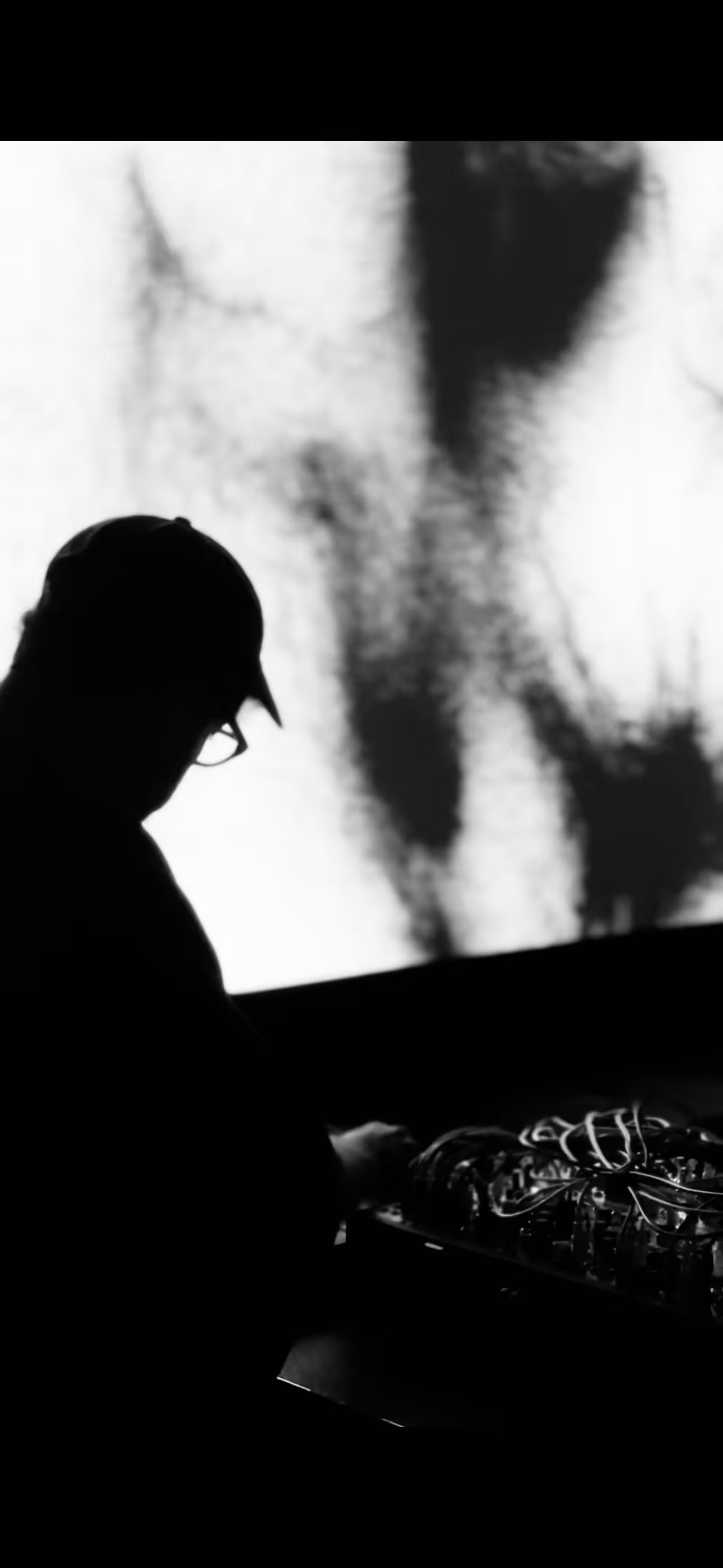


SAKR is a multimedia artist known for his genre-defying approach and his ability to merge sound, performance, and visual art into one living organism. With his audiovisual works reaching millions across social media, SAKR has cultivated a global following by reclaiming space for experimentation and authenticity in a landscape often shaped by formula and trend.
We caught up with him to talk about his creative process, modular philosophy, and his experience with the OXI One MKII.
You’ve crafted a very distinctive sound world — what first drew you to sound design and electronic music?
I’ve always been fascinated by sound as something alive — as a texture that can move, breathe, and evolve.
Electronic music gave me the freedom to sculpt that energy directly. I was drawn to the idea that machines could become extensions of my imagination. And honestly, I just love the nerdiness of sound design — it’s endless discovery.
When you design sounds, do you start from a concept, a mood, or do you let experimentation lead?
Usually, I start from curiosity rather than a clear concept. I like to enter a space of exploration where sound reveals its own shape — I just trust my hands. Sometimes a mood emerges naturally, other times it’s more of a dialogue with the instrument. And sometimes it feels like I’ve never made music in my life, haha.
I try to trust the process. The moment a sound starts to feel alive, I follow it. And if it’s not there, I check in with my creativity and see what it needs. I’m a bit woo woo when it comes to that. I really believe in Elizabeth Gilbert’s Big Magic idea — that creativity is a collaboration with something beyond you, like a ghost in the walls. It keeps the ego in check, and on rough days, it’s comforting to remember you’re not the only one to blame, haha.
You’ve been using the OXI One MKII lately — what was your first impression of it?
My first impression was how fluid and immediate it felt. I instantly understood how to use it, which is rare for something so deep (and for me in general, haha). It’s also rare for a sequencer to feel this playable. The OXI felt like an instrument rather than a controller — something that invites interaction and performance, instead of just programming patterns and pressing play.
What’s your favorite feature of it?
The modulation lanes and performance page completely opened up what a sequencer could feel like in a live context. It’s not just about programming notes and triggers — it’s about sculpting movement in real time. You can wander off in a new direction, explore, then simply relaunch the original pattern to come back home. It’s so much fun and surprisingly collaborative for a machine, which is hard to achieve.
Also, the effortless integration with Eurorack, standalone hardware, and software makes it the perfect bridge for my hybrid, multimedia world.
Can you give us a quick rundown of your performance setup?
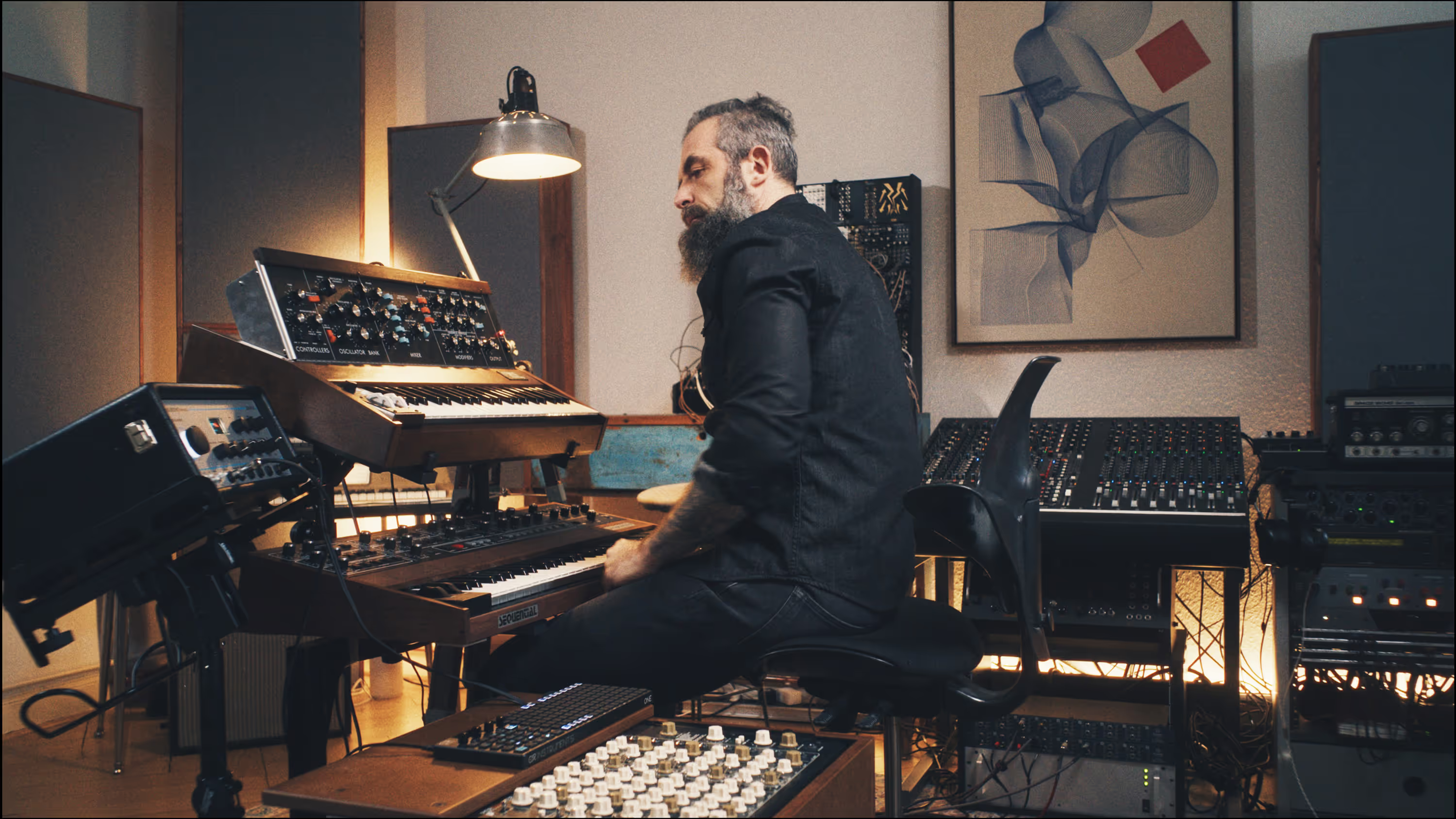
The performance revolves around three main sound sources: the Ohmforce Bohm, the Squarp Rample for drum samples I created on the SOMA Pulsar-23, and the Verbos Sawtooth Stack as the main voice. Both the Rample and Sawtooth Stack run through the Verbos Scan & Pan, then into the Make Noise Mimeophon for reverb and delay textures.
I use subtle sidechaining by inverting an envelope from the Frap Tools Falistri through the 321, multing that to the VCAs on the Scan & Pan, plus some global sidechaining via the Bohm Performer after the Mimeophon.
Both the Rample and Sawtooth Stack are MIDI-controllable, so I use the OXI Split to sequence and modulate their parameters, while the OXI Pipe handles sequencing and modulation for the Bohm, groove, and filters on both the Bohm and Mutable Instruments Blades — creating build-ups and dynamic shifts across the piece.
As for the performance itself, there wasn’t really a strict plan. I built a few sequences that spoke to each other and just explored the space between them. That’s the beauty of it for me — finding moments where the machines speak back and inspire where I go next.
What’s one lesson or realization that has shaped your creative path recently?
I’ve been learning to let go of the need for perfection and focus on presence instead. Most of my decisions are wrong, haha — but that’s often when I find the most meaningful moments. Embracing unpredictability and trusting instinct makes the music feel more human. The best things happen when I allow space for accidents and mistakes.
What’s your strategy when building modular setups? How important is performability in your patches?
For me, modular setups need to invite an almost meditative process, but also include a few points of instability — places where I can interact and respond in the moment. The process keeps me inspired, and performability keeps me connected.
On a practical level (if you can even use that word in the modular world, haha), I make sure a few key parameters are always within reach, while the rest — buried under cables — are assigned to mod lanes I can manipulate. That way, I can play with the system in real time without losing depth or complexity.
What’s next for you — any upcoming projects or sonic explorations we should watch for?
I’m currently exploring new material and developing new visual systems — shaping ideas that will evolve into a new body of work for release next year. I’m also reworking my live show for a few headline performances in early 2026.
Mostly, I’m just staying open to exploration and enjoying the process. At the end of the day, that’s all I really have control over — and what I need to protect the most.