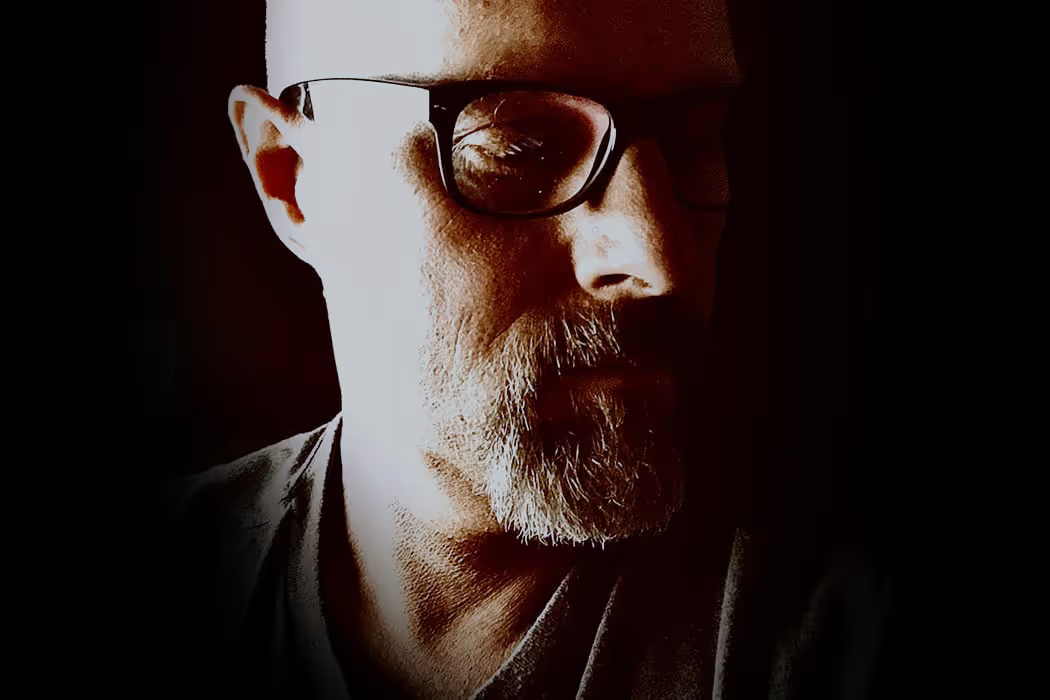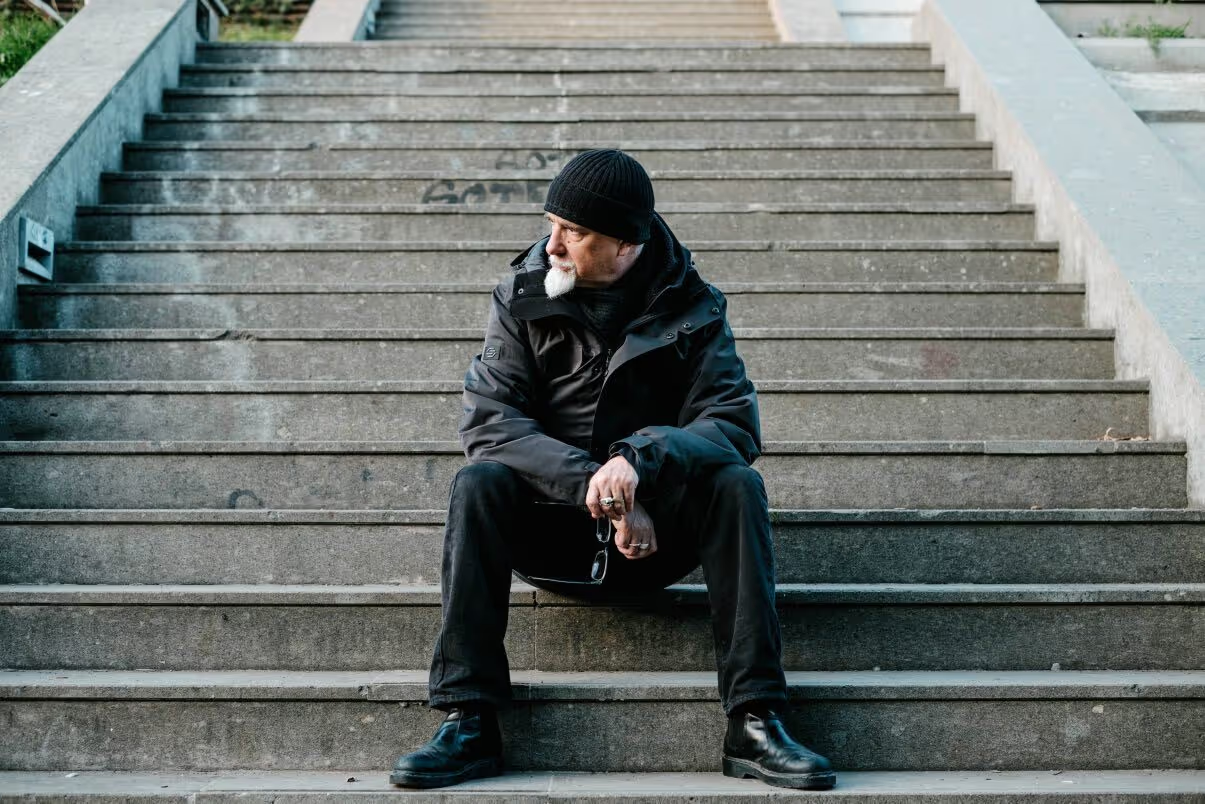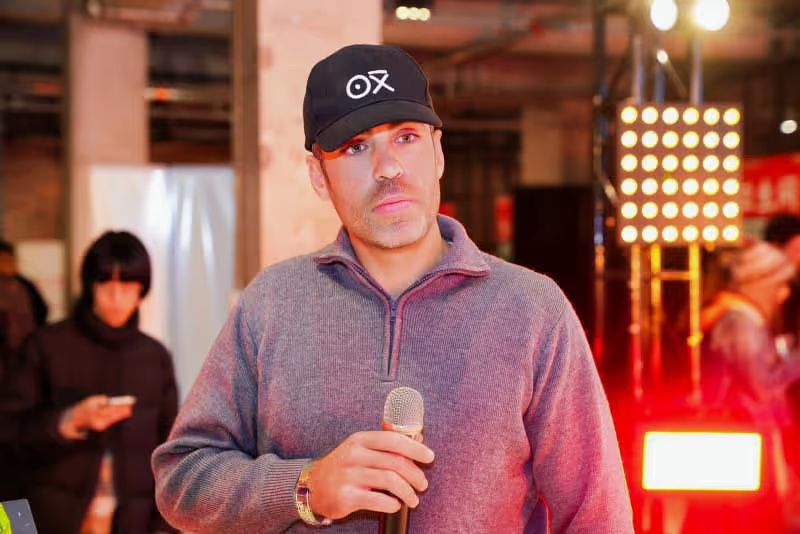


As 2025 came to a close, I realized that I’d spent seven years of my life dedicated to the OXI Instruments project. Seven intense, demanding years—but they didn’t come out of nowhere. They were preceded by many other innovators driven by the same level of effort, obsession, and dedication. With a new year ahead, this feels like the right moment to step back and connect the dots.
My life revolved around the sea from a very young age. Windsurfing was my passion—a sport that only truly works when the conditions are right: strong wind, proper waves and patience. Progress meant countless hours in the water, waiting for the perfect moment to practice, improve, and learn new maneuvers. My entire focus was about being in the right place at the right time.
Even though it fulfilled me deeply, I never saw windsurfing as a realistic way to make a living. For that, I studied industrial engineering. I learned a bit about electronics—not much, honestly—but enough to spark an interest. At the time, I was living in a coastal town in Galicia and imagined a future somewhere with better wind and waves—Brazil, maybe—paired with a stable engineering job.
That was the plan until everything changed.
At 23, I was diagnosed with a serious wrist condition. From the start, doctors were clear: there was no definitive solution. I would have to live with it for the rest of my life. It was incredibly difficult to accept. Windsurfing, surfing, snowboarding —suddenly, all of it was off the table. One by one, the doors closed, and I struggled to find meaning in what came next.
Around that time, I saw a friend making music with Fruity Loops. Almost impulsively, I downloaded Logic Pro 9.
I had absolutely no idea what I was doing. I started by arranging audio loops, trying to turn them into something resembling music. I didn’t know what a musical scale was. I didn’t know what a synthesizer was. The black keys sounded wrong, plugin interfaces felt hostile, and nothing made much sense. And yet—there was something there. A strange mix of frustration, curiosity, entertainment, and small moments of satisfaction that kept pulling me back.
Anyone who knows me knows I’m stubborn. I decided to pour all my energy—and a lot of existential emptiness—into learning music production. I told myself that if I could master production, DJing would be the easy part.
After my first surgery, I finished my degree in 2013 with decent results, defended a fairly mediocre thesis in 2014, and shortly after landed my first job as an automotive engineer, working as a software developer through a kind of scholarship. I stayed there for over two years. I thought I’d specialize further, maybe even move to Germany.
The reality was simple: the job didn’t fulfill me. Music did.
.avif)
Outside of work, I devoted myself entirely to production. I learned web development, marketing, and other skills on my own. I trained as an embedded software developer. I read every manual I could get my hands on—Massive, FM8, Serum, Sylenth, Hive, even Bazille. I studied mixing, compression, and music theory obsessively. I had started late, and there was so much ground to cover. That was my life.
In 2016, I underwent another major wrist surgery. Recovery took a year and a half. But if anything, I made more music, not less.
By then, I had started releasing my first tracks—some official releases on Beatport, some unofficial remixes on SoundCloud. In 2017, I moved to Germany for work for about six months, which helped financially but didn’t change my priorities.
By 2018, I finally felt ready to think seriously about consolidating a musical project and aiming for better labels. I invested in my first hardware: a Roland TR-8 and a Minibrute 2S—my first hardware sequencer. I also started teaching music production at IGMA and prepared my first live performance using Ableton and an APC40 Mk1.
Not long after, it became obvious that the environment I was living in wasn’t helping me grow as a producer or performer. That’s when a Plan B started forming.
Maybe making a decent living as a producer and DJ would take too long—or might never happen. But what if I combined my engineering background with everything I had learned about music? What if I built something of my own?
After my third surgery in 2018, going back to my job wasn’t an option. I was completely demotivated, and my salary didn’t reflect my experience. At the beginning of 2019, after more than four years, I quit my job and used my savings to dive into designing a music tool.
The idea was vague at first. The core intention was simple: help beginner producers have an easier, more intuitive path when composing music. I trusted that clarity would come with time and work.
My experiences with existing hardware sequencers had been frustrating. Music had evolved, but the tools hadn’t kept up—at least not in the way I needed them to. The first project was called Melomaker, and the original sequencer probably had 999 fewer features than today’s OXI One.
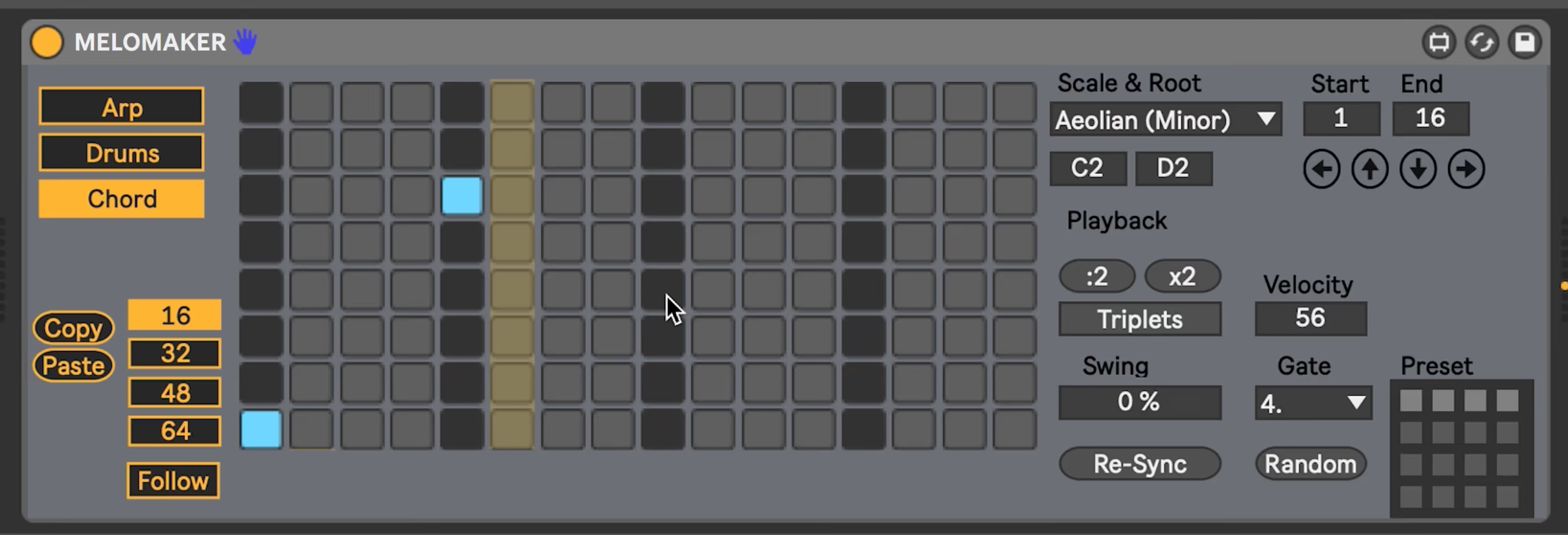
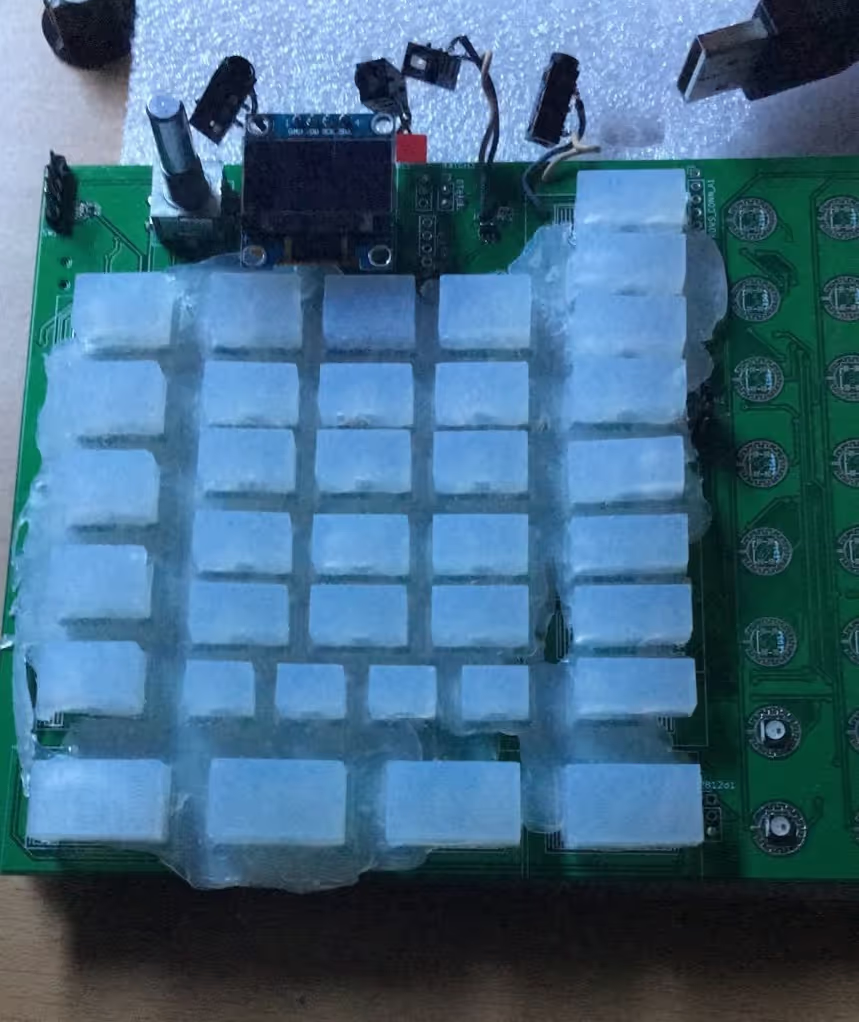
What turned that rough idea into one of the world’s best-selling hardware sequencers wasn’t a single breakthrough, but tens of thousands of hours of work—and a constant accumulation of good ideas. Some mine, many coming from others along the way. For that, I’m deeply grateful.
The goal was always the same: to offer more than what people expected for their investment. To maximize value and versatility. To create an instrument that grows with its user—a kind of game with endless bonus missions. That mindset transformed Melomaker into the OXI One, and later into the OXI One MKII.
Along the way, I also had the chance to design my ideal modular synthesizer, Coral, and several other tools and utilities.
Even today, it’s hard for me to fully comprehend the level of consistency, dedication, and frustration required to make both the hardware and software work. But one thing is clear: sustained hard work does lead somewhere. If AI tools had existed five years earlier, I probably would’ve saved half the time—and maybe I’d have fewer gray hairs now.
As we move forward into 2026, I can finally lift my head and feel at peace. The vision has reached a solid place. I plan to release music again—hopefully with one of the labels I’ve been pursuing for a while—and of course, to keep pushing OXI forward. Today, we’re already more than ten people involved, both internally and externally.
I’ll leave the story behind the origin and motivation of the E16 for another time.
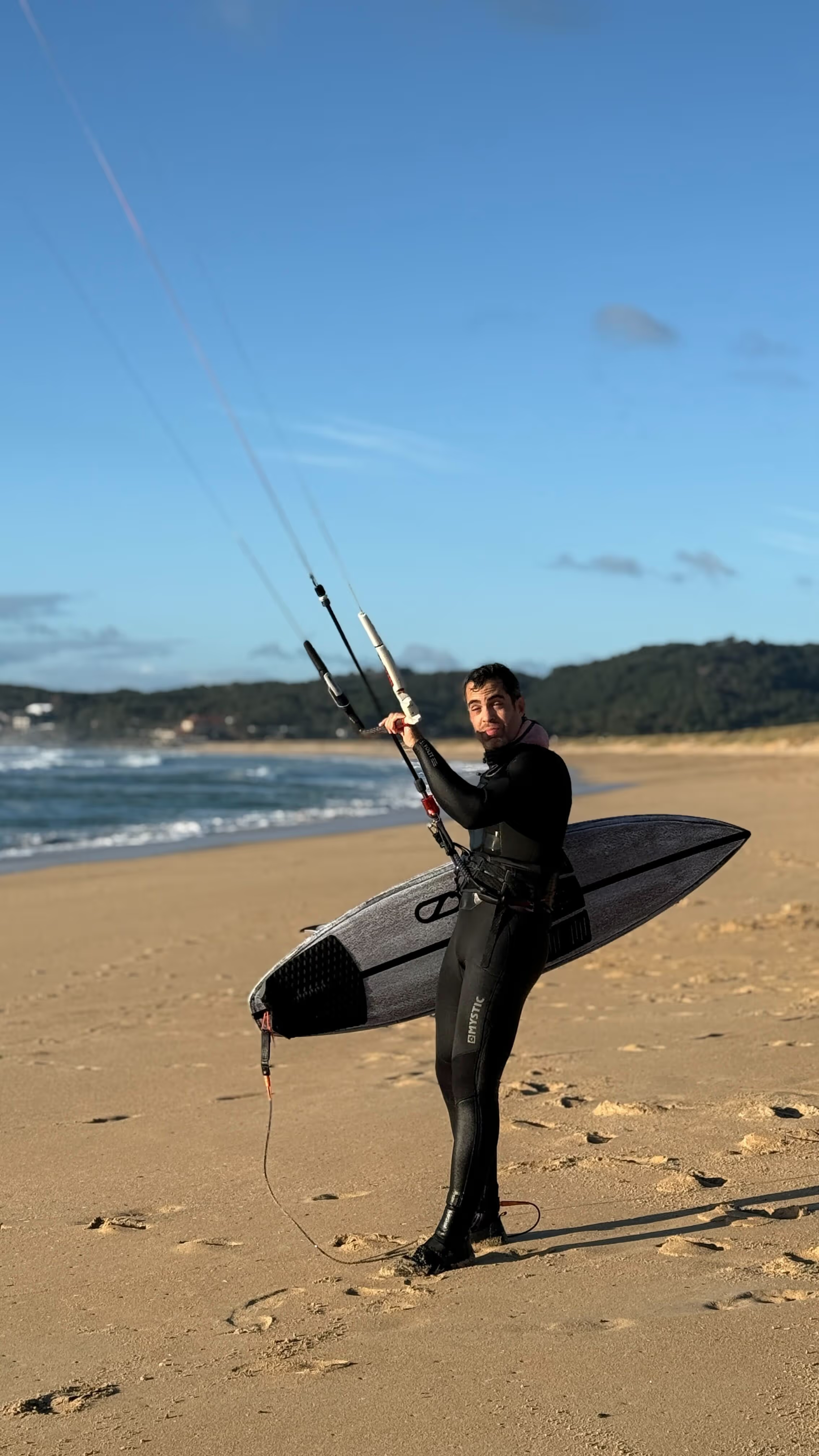
And for the record: I learned how to kiteboard. It gave me a way back into the water—that part of me never really left.
- With Gratitude, Manuel
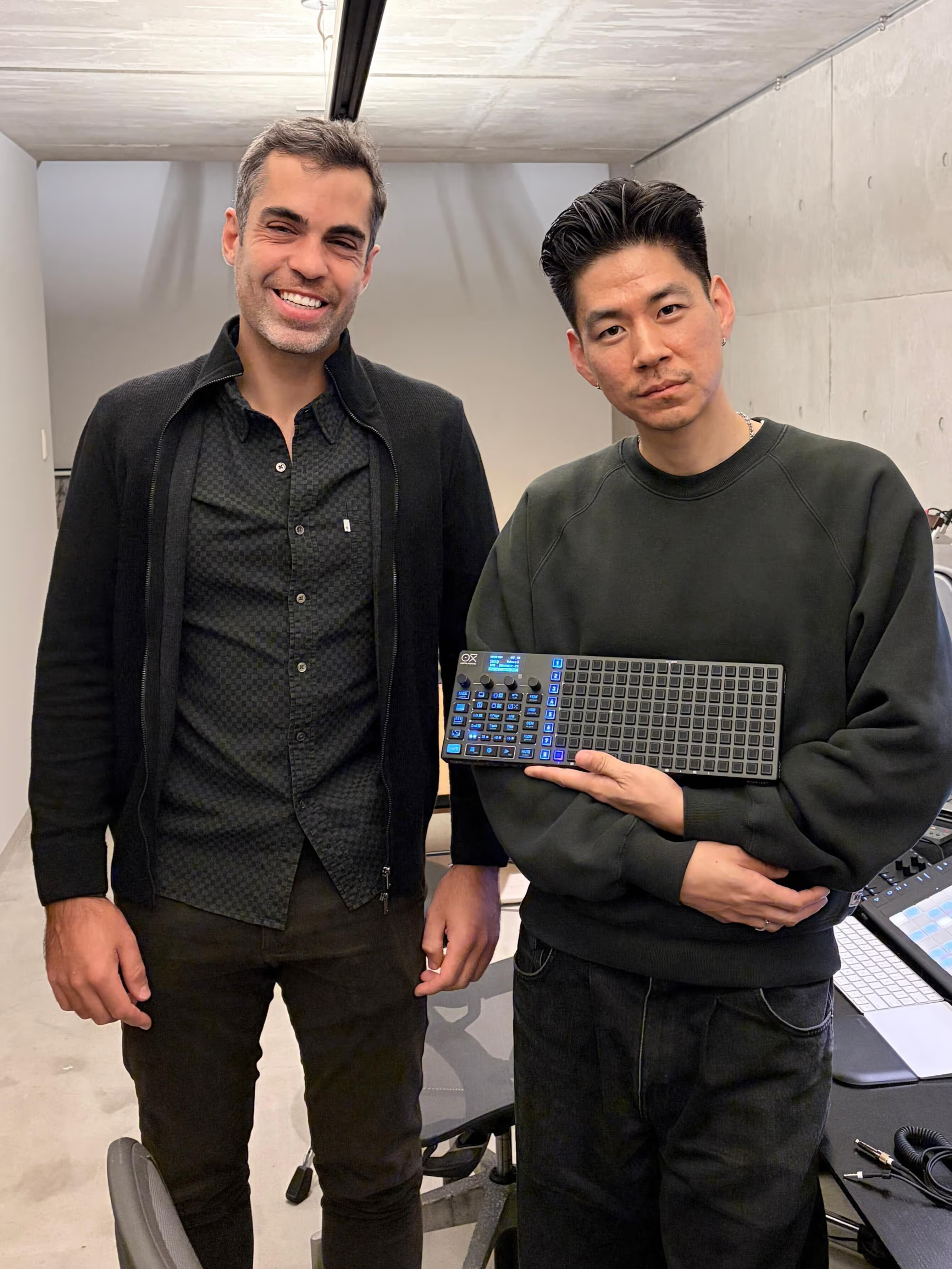
Check out our Youtube for OXI tutorials. We just began our new OXI ONE MKII Beginner Series.